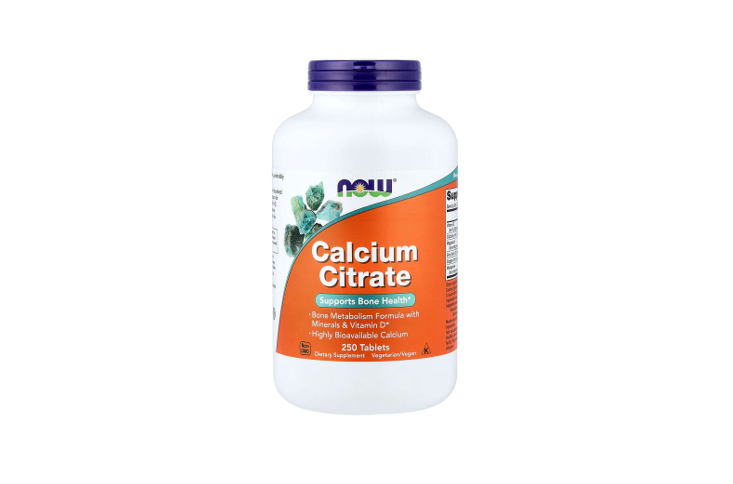
Calcium Citrate
What is calcium and why do I need it?
Calcium is a mineral, a nutrient that you need (in small amounts) to keep your body healthy. You have more calcium in your body than any other mineral.
Calcium has many important jobs:
To build and maintain strong bones. Your body stores almost all of its calcium in your bones and teeth to keep them strong.
To help your muscles move.
To help your nerves to carry messages between your brain and the rest of your body.
To help your blood vessels move blood throughout your body.
To help release hormones that affect many functions in your body.
Not getting enough calcium can cause several conditions, including:
Osteoporosis, a disease which can make your bones weaker and more likely to break.
Rickets, a disease in children that causes soft, weak bones.
Osteomalacia, a condition which causes soft bones in children and adults.
How do I get calcium?
You can get calcium from foods and supplements. You may be able to get enough calcium by eating a variety of foods, including:
Dairy products such as milk, cheese, and yogurt. These are the main food sources of calcium for most people in the United States.
Leafy, green vegetables such as kale, broccoli, and Chinese cabbage (bok choi).
Fish with soft bones that you can eat, such as canned sardines and salmon.
Calcium-enriched foods such as breakfast cereals, fruit juices, soy and rice drinks, and tofu. The product labels for these foods will show how much calcium they have.
Calcium is available in supplements. It is also included in many multivitamins. The two main forms of calcium supplements are calcium carbonate and calcium citrate:
Calcium carbonate is absorbed best when taken with food. Some over-the-counter antacids, such as Tums and Rolaids, also contain calcium carbonate.
Calcium citrate is absorbed well on an empty stomach or a full stomach. People with low levels of stomach acid absorb calcium citrate more easily than calcium carbonate.
Calcium is absorbed best when you take 500 mg or less at one time. If you are taking more than that amount each day, take a smaller dose twice a day rather than taking it all at once.
Calcium supplements might cause gas, bloating, and constipation in some people. If you have any of these symptoms, you could try:
Spreading out the calcium dose throughout the day
Taking it with meals
Switching the form of calcium you take
How much calcium do I need?
The amount of calcium you need each day depends on your age and other factors. The recommended amounts, in milligrams (mg), are:
Birth to 6 months: 200 mg
Infants 7-12 months: 260 mg
Children 1-3 years: 700 mg
Children 4-8 years: 1,000 mg
Children 9-13 years: 1,300 mg
Teens 14-18 years: 1,300 mg
Adults 19-50 years: 1,000 mg
Adult men 51-70 years: 1,000 mg
Adult women 51-70 years: 1,200 mg
Adults 71 years and older: 1,200 mg
Pregnant and breastfeeding teens: 1,300 mg
Pregnant and breastfeeding adults: 1,000 mg
Certain people may have trouble getting enough calcium, including:
Children and teens age 4 to 18 years
People who are Black or Asian
Adults age 50 years and older living in poverty
Postmenopausal women; your body absorbs and retains less calcium after menopause
People who don't drink milk or eat other dairy products
Check with your health care provider to see if you need to take calcium supplements, and if so, how much you should take. Your provider may want to first do a calcium blood test to see if you are getting enough of it.
NIH: National Institutes of Health Office of Dietary Supplements
Start Here
Calcium (National Institutes of Health, Office of Dietary Supplements)Also in Spanish
Calcium and Vitamin D (Bone Health and Osteoporosis Foundation)
Diagnosis and Tests
Calcium Blood Test (National Library of Medicine)Also in Spanish
Calcium in Urine Test (National Library of Medicine)Also in Spanish
Related Issues
Calcium and Calcium Supplements: Achieving the Right Balance (Mayo Foundation for Medical Education and Research)Also in Spanish
Calcium and Vitamin D: Important for Bone Health (National Institute of Arthritis and Musculoskeletal and Skin Diseases)Also in Spanish
Calcium Supplements: A Risk Factor for Heart Attack? (Mayo Foundation for Medical Education and Research)Also in Spanish
Specifics
Hypercalcemia (Mayo Foundation for Medical Education and Research)
Genetics
Idiopathic infantile hypercalcemia: MedlinePlus Genetics (National Library of Medicine)
Health Check Tools
Calcium Calculator (International Osteoporosis Foundation)
Test Your Knowledge
Test Your Bone-Health Diet Knowledge (Medical Encyclopedia)Also in Spanish
Clinical Trials
ClinicalTrials.gov: Calcium, Dietary (National Institutes of Health)
ClinicalTrials.gov: Hypercalcemia (National Institutes of Health)
ClinicalTrials.gov: Hypocalcemia (National Institutes of Health)
Journal ArticlesReferences and abstracts from MEDLINE/PubMed (National Library of Medicine)
Article: Calcium Intake and Food Sources Among Children, Adolescents and Women in...
Article: Association Between Dietary Calcium or Dairy Product Intake and Metabolic Syndrome...
Article: Oral calcium supplements to reduce the bioaccessibility and bioavailability of arsenic...
Find an Expert
Eunice Kennedy Shriver National Institute of Child Health and Human Development Also in Spanish
National Institute of Arthritis and Musculoskeletal and Skin Diseases Also in Spanish
National Institutes of Health, Office of Dietary Supplements
Children
Kids and Their Bones (National Institute of Arthritis and Musculoskeletal and Skin Diseases)Also in Spanish
Low Calcium in Babies (Hypocalcemia) (Nemours Foundation)Also in Spanish
Patient Handouts
Calcium in diet (Medical Encyclopedia)Also in Spanish