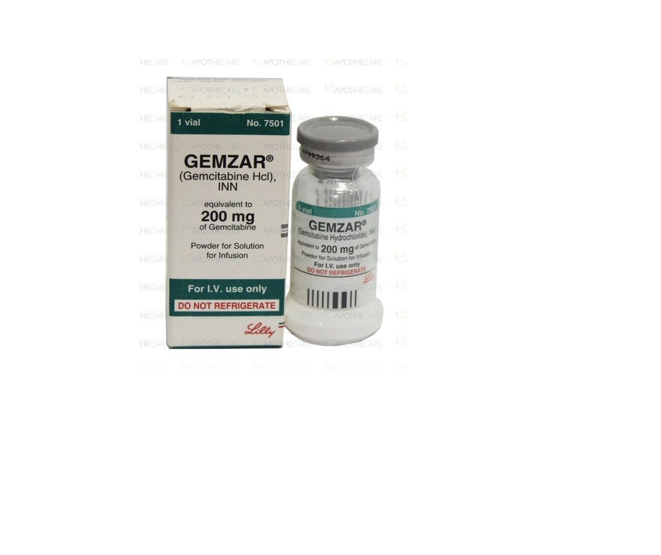
Gemzar
Why is this medication prescribed?
Gemcitabine is used in combination with carboplatin to treat ovarian cancer (cancer that begins in the female reproductive organs where eggs are formed) that returned at least 6 months after finishing a previous treatment. It also used in combination with paclitaxel (Abraxane®, Taxol®) to treat breast cancer that has not improved or that has worsened after treatment with other medications. Gemcitabine is used in combination with cisplatin to treat a type of lung cancer (non-small cell lung cancer; NSCLC) that has spread to other parts of the body and cannot be treated with surgery. Gemcitabine is also used to treat pancreatic cancer that has spread to other parts of the body and has not improved or worsened after treatment with another medication. Gemcitabine is in a class of medications called antimetabolites. It works by slowing or stopping the growth of cancer cells in your body.
How should this medicine be used?
Gemcitabine comes as a powder to be mixed with liquid to be injected over 30 minutes intravenously (into a vein) by a doctor or nurse in a medical facility. When gemcitabine is used to treat ovarian or breast cancer, it is usually given on certain days every 3 weeks. When gemcitabine is used to treat lung cancer, it is usually given on certain days every 3 or 4 weeks. When gemcitabine is used to treat pancreatic cancer, it may be injected once every week. Your doctor will tell you how often you will receive gemcitabine injection. The schedule depends on the condition you have and on how your body responds to the medication. The length of treatment depends on the types of drugs you are taking, how well your body responds to them, and the type of cancer or condition you have. Your doctor may need to stop or delay your treatment if you experience certain side effects.
Ask your pharmacist or doctor for a copy of the manufacturer's information for the patient.
Other uses for this medicine
Gemcitabine is also sometimes used to treat bladder cancer and cancer of the biliary tract (cancer in the organs and ducts that make and store bile, the liquid made by the liver). Talk to your doctor about the risks of using this medication for your condition.
This medication may be prescribed for other uses; ask your doctor or pharmacist for more information.
What special precautions should I follow?
Before receiving gemcitabine,
tell your doctor and pharmacist if you are allergic to gemcitabine, any other medications, or any of the ingredients in gemcitabine. Ask your pharmacist for a list of the ingredients.
tell your doctor and pharmacist what other prescription and nonprescription medications, vitamins, nutritional supplements, and herbal products you are taking or plan to take.
tell your doctor if you drink or have ever drunk large amounts of alcohol or if you have or ever had liver disease, including hepatitis, or kidney disease.
tell your doctor if you have previously received or are currently receiving radiation therapy.
tell your doctor if you are pregnant, plan to become pregnant, or if you plan to father a child. If you are female, you will need to take a pregnancy test before starting treatment and use effective birth control to prevent a pregnancy during your treatment and for at least 6 months after your final dose. If you are male, you and your female partner should use effective birth control while you are receiving gemcitabine and for 3 months after the final dose. Talk to your doctor about using birth control to prevent pregnancy during your treatment with gemcitabine. If you or your partner become pregnant while receiving gemcitabine, call your doctor. Gemcitabine may harm the fetus.
tell your doctor if you are breastfeeding. You should not breastfeed while you are receiving gemcitabine injection and for 1 week after your final dose.
you should know that this medication may decrease fertility in men. Talk to your doctor about the risks of receiving gemcitabine.
What special dietary instructions should I follow?
Unless your doctor tells you otherwise, continue your normal diet.
What side effects can this medication cause?
Gemcitabine may cause side effects. Tell your doctor if any of these symptoms are severe or do not go away:
nausea
vomiting
diarrhea
constipation
loss of appetite
sores in the mouth and throat
hair loss
headache
sore or painful muscles
pain, burning, or tingling in the hands or feet
swelling, pain, redness, or burning at the injection site
Some side effects can be serious. If you experience any of these symptoms, call your doctor immediately :
rash, itching, hives, throat or tongue swelling, shortness of breath, difficulty breathing, vomiting, lightheadedness, or fainting
redness, blistering, peeling of skin, fever, feeling ill, muscle aches and pains
unusual bleeding or bruising, red or black tarry stools, or coughing up or vomiting blood or material that looks like coffee grounds
changes in volume of urine
fever, sore throat, ongoing cough and congestion, or other signs of infection
unusual tiredness or weakness, shortness of breath, or wheezing
yellowing of the skin or eyes, dark urine, loss of appetite, fatigue, or pain or discomfort in right upper stomach area
swelling of the feet, ankles, or lower legs; stomach pain; watery stools; or tiredness
fast, irregular, or pounding heartbeat
headache, seizures, tiredness, confusion, or vision changes
Gemcitabine may cause other side effects. Call your doctor if you have any unusual problems while receiving this medication.
If you experience a serious side effect, you or your doctor may send a report to the Food and Drug Administration's (FDA) MedWatch Adverse Event Reporting program online (https://www.fda.gov/Safety/MedWatch) or by phone (1-800-332-1088).
In case of emergency/overdose
In case of overdose, call the poison control helpline at 1-800-222-1222. Information is also available online at https://www.poisonhelp.org/help. If the victim has collapsed, had a seizure, has trouble breathing, or can't be awakened, immediately call emergency services at 911.
Symptoms of overdose may include the following:
severe rash
pain, burning, or tingling in the hands or feet
unusual bleeding or bruising
red or black, tarry stools
pink, red, or dark brown urine
coughing up or vomiting blood or material that looks like coffee grounds
fever, sore throat, ongoing cough and congestion, or other signs of infection
extreme tiredness
What other information should I know?
Keep all appointments with your doctor and the laboratory. Your doctor will order certain lab tests before and during your treatment to check your body's response to gemcitabine.
Keep a written list of all of the prescription and nonprescription (over-the-counter) medicines, vitamins, minerals, and dietary supplements you are taking. Bring this list with you each time you visit a doctor or if you are admitted to the hospital. You should carry the list with you in case of emergencies.
Brand names
Gemzar®