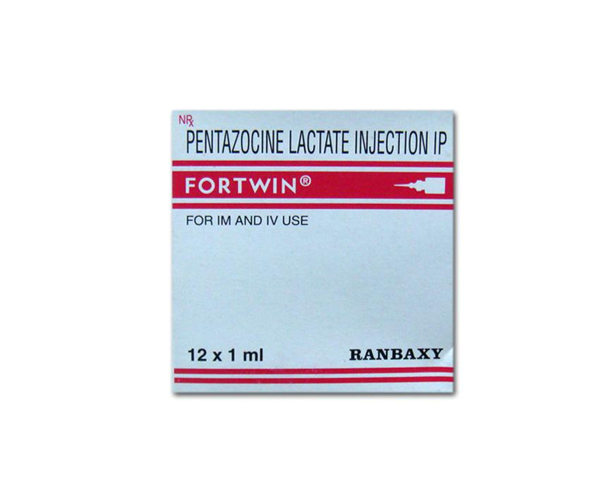
Fortwin
Why is this medication prescribed?
Pentazocine is used to relieve severe pain. Pentazocine is in a class of medications called opiate (narcotic) analgesics. It works by changing the way the brain and nervous system respond to pain.
How should this medicine be used?
Pentazocine comes as a tablet to take by mouth. Take every 3 to 4 hours as needed.
Pentazocine tablets should be taken only by mouth. Do not dissolve and inject the tablets. Injecting pentazocine may cause serious health problems or death.
Your doctor may adjust your dose of pentazocine during your treatment, depending on how well your pain is controlled and on the side effects that you experience. Talk to your doctor about how you are feeling during your treatment with pentazocine. Tell your doctor if you feel that your pain is not controlled or if your pain increases, becomes worse, or if you have new pain or an increased sensitivity to pain during your treatment with pentazocine. Do not take more of it or take it more often than prescribed by your doctor.
Talk to your doctor or pharmacist about access to rescue medicines, naloxone or nalmefene, while taking pentazocine. Rescue medications can reverse the life-threatening effects of an opioid overdose and are available over the counter or with a prescription. Make sure that you and your family members and people usually around you know how to recognize an overdose, how to use naloxone or nalmefene, and what to do until emergency medical help arrives. Your doctor or pharmacist will show you and others how to use it. If symptoms of an overdose occur, they should give the first dose of naloxone, call 911 immediately, and stay with you and watch you closely until emergency medical help arrives. If your symptoms return, the person should give you another dose of the rescue medication. Additional doses may be given every 2 to 3 minutes, if symptoms return before medical help arrives.
Do not stop taking pentazocine without talking to your doctor. If you suddenly stop taking pentazocine, you may experience withdrawal symptoms such as restlessness, teary eyes, runny nose, yawning, sweating, chills, hair standing on end, muscle pain, widened pupils (black circles in the middle of the eyes), irritability, anxiety, back or joint pain, weakness, stomach cramps, difficulty falling asleep or staying asleep, nausea, loss of appetite, vomiting, diarrhea, fast breathing, or fast heartbeat. Your doctor will probably decrease your dose gradually.
Other uses for this medicine
This medication may be prescribed for other uses; ask your doctor or pharmacist for more information.
What special precautions should I follow?
Before taking pentazocine,
tell your doctor or pharmacist if you are allergic to this drug, any part of this drug, or any other drugs, foods or substances. Tell your doctor or pharmacist about the allergy and what symptoms you had.
some medications should not be taken with pentazocine. Make sure you have discussed any medications you are currently taking or plan to take before starting pentazocine with your doctor and pharmacist. Before starting, stopping, or changing any medications while taking pentazocine, please get the advice of your doctor or pharmacist.
tell your doctor or pharmacist if you are taking the following medications or have stopped taking them within the past two weeks: isocarboxazid, linezolid, methylene blue, phenelzine, selegiline, or tranylcypromine.
the following nonprescription or herbal products may interact with pentazocine: St. John's wort and tryptophan. Be sure to let your doctor and pharmacist know that you are taking these medications before you start using pentazocine. Do not start these medications while using pentazocine without discussing it with your healthcare provider.
tell your doctor if you have slowed breathing, asthma, chronic pulmonary disease (COPD), or other lung problems; a blockage or narrowing of your stomach or intestines, or paralytic ileus (condition in which digested food does not move through the intestines). Your doctor may tell you not to take pentazocine.
tell your doctor if you have or have ever had seizures; liver, kidney, thyroid, gallbladder, pancreas, or heart disease.
tell your doctor if you are pregnant, plan to become pregnant, or are breast-feeding. If you become pregnant while taking pentazocine, call your doctor.
you should know that this medication may decrease fertility in men and women. Talk to your doctor about the risks of taking pentazocine.
you should know that this medication may make you drowsy. Do not drive a car or operate machinery until you know how this medication affects you.
you should know to not drink alcoholic beverages while you are taking pentazocine. Alcohol can make the side effects from pentazocine worse.
you should know that pentazocine may cause dizziness, lightheadedness, and fainting when you get up too quickly from a lying position. This is more common when you first start taking pentazocine. To avoid this problem, get out of bed slowly, resting your feet on the floor for a few minutes before standing up.
you should know that pentazocine may cause constipation. Talk to your doctor about changing your diet and using other medications to treat or prevent constipation.
What special dietary instructions should I follow?
Unless your doctor tells you otherwise, continue your normal diet.
What should I do if I forget a dose?
This medication usually is taken as needed. If your doctor has told you to take pentazocine regularly, take the missed dose as soon as you remember it. However, if it is almost time for the next dose, skip the missed dose and continue your regular dosing schedule. Do not take a double dose to make up for a missed one.
What side effects can this medication cause?
Pentazocine may cause side effects. Tell your doctor if any of these symptoms or those in the SPECIAL PRECAUTIONS sections are severe or do not go away:
headache
nausea, vomiting
sweating
decreased sexual desire, inability to get or keep an erection
Some side effects can be serious. If you experience any of the following symptoms or those listed in the IMPORTANT WARNING section, call your doctor immediately:
chest pain, changes in heartbeat
agitation, hallucinations (seeing things or hearing voices that do not exist), fever, sweating, confusion, fast heartbeat, shivering, severe muscle stiffness or twitching, loss of coordination, nausea, vomiting, or diarrhea
nausea, vomiting, loss of appetite, weakness, or dizziness
rash; hives; hoarseness; difficulty breathing or swallowing; or swelling of the face, mouth, tongue or throat
difficulty swallowing, regurgitation (bringing up swallowed food into throat and mouth), pain in the chest area
new pain or pain from touch or doing ordinary tasks such as combing your hair
seizures
extreme drowsiness
unusual snoring or long pauses during breaths during sleep
Pentazocine may cause other side effects. Call your doctor if you have any unusual problems while you are taking this medication.
If you experience a serious side effect, you or your doctor may send a report to the Food and Drug Administration's (FDA) MedWatch Adverse Event Reporting program online (https://www.fda.gov/Safety/MedWatch) or by phone (1-800-332-1088).
What should I know about storage and disposal of this medication?
Keep this medication in the container it came in, tightly closed, and out of reach of children, and in a location that is not easily accessible by others, including visitors to the home. Store it at room temperature and away from excess heat and moisture (not in the bathroom).
Dispose of any medication that is outdated or no longer needed through a medicine take-back program. If you do not have a take-back program nearby or one that you can access promptly, flush any pentazocine tablets that are outdated or no longer needed down the toilet. Talk to your pharmacist about the proper disposal of your medication.
Keep all medication out of sight and reach of children as many containers are not child-resistant. Always lock safety caps. Place the medication in a safe location – one that is up and away and out of their sight and reach. https://www.upandaway.org
In case of emergency/overdose
In case of overdose, call the poison control helpline at 1-800-222-1222. Information is also available online at https://www.poisonhelp.org/help. If the victim has collapsed, had a seizure, has trouble breathing, or can't be awakened, immediately call emergency services at 911.
Symptoms of overdose may include the following:
slow or shallow breathing, difficulty breathing, unusual snoring
sleepiness, unable to respond or wake up
cold, clammy skin
narrowed or widened pupils (dark circles in the middle of the eyes)
slowed heartbeat
What other information should I know?
Keep all appointments with your doctor.
Before having any laboratory test, tell your doctor and the laboratory personnel that you are taking pentazocine.
Do not let anyone else take your medication. Pentazocine is a controlled substance. Prescriptions may be refilled only a limited number of times; ask your pharmacist if you have any questions.
Keep a written list of all of the prescription and nonprescription (over-the-counter) medicines, vitamins, minerals, and dietary supplements you are taking. Bring this list with you each time you visit a doctor or if you are admitted to the hospital. You should carry the list with you in case of emergencies.
Brand names
Talacen®