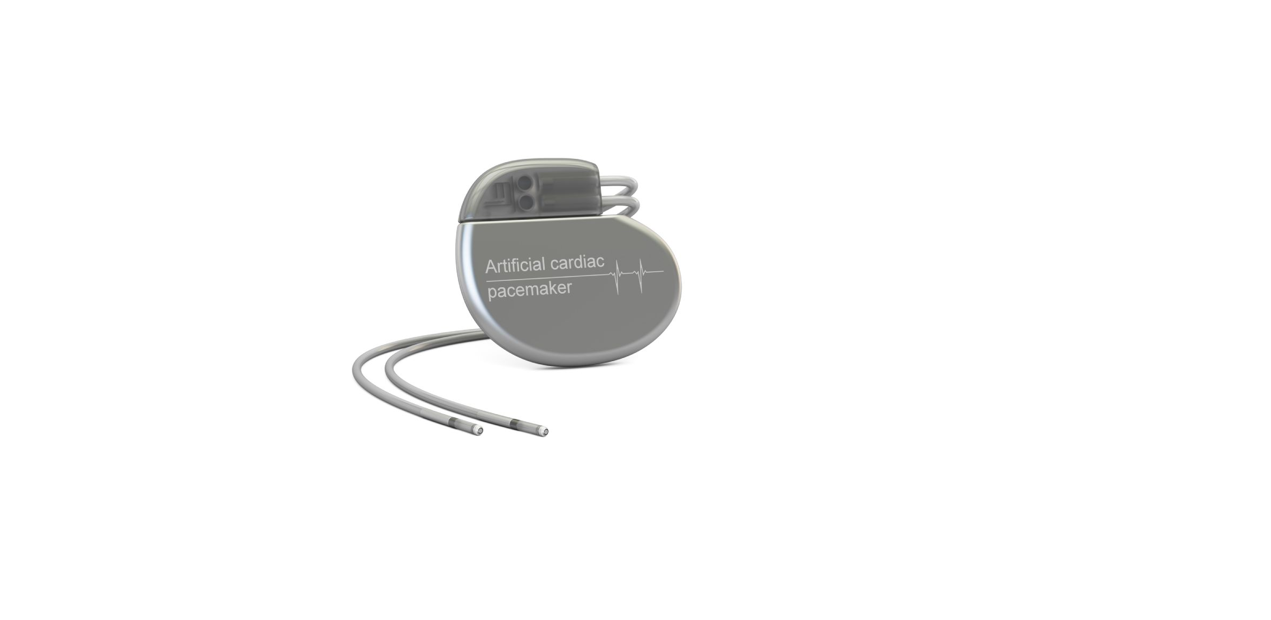
Pacemaker
A pacemaker is a device a healthcare provider places in your upper body to help your heart beat at a typical rate and rhythm. The device can stabilize abnormal heart rhythms and prevent problems that could disrupt or endanger your life.
Pacemakers use electrical impulses to correct problems with your heart’s electrical system. Typically, this system tells your heart’s chambers when it’s their turn to squeeze. When your heart’s electrical system doesn’t work right, your heart’s chambers may squeeze in the wrong order or too weakly. When this happens, they can’t provide enough blood to your body.
A cardiac pacemaker can sense when your heartbeat is too slow. Then, it delivers electrical impulses to control the rhythm of your heart. The device can sometimes help people with a fast or irregular heartbeat. But it can’t deliver a shock to correct the rhythm.
Talking to your healthcare provider about your concerns or symptoms is the first step to finding out if a pacemaker can help you. Pacemakers are common. They can treat problems with your heart’s electrical system, like certain arrhythmias (abnormal heart rhythms) or heart blocks. They also treat heart failure and heart palpitations (pounding in your chest). People may also need them if they’re short of breath or have unexplained dizziness or lightheadedness, nausea, confusion or fainting.
Types of pacemakers
Depending on the heart problem, your healthcare provider may suggest a specific type of cardiac pacemaker with one to three wires (called leads). Types of pacemakers include:
Single-chamber pacemaker: This uses a single wire that attaches to one chamber of your heart.
Dual-chamber pacemaker: This uses two wires that attach to two chambers of your heart.
Biventricular pacemaker: This uses three wires, two of which attach to the lower chambers of your heart. A third wire connects to the right upper chamber of your heart. This is for cardiac resynchronization therapy (CRT).
Leadless pacemaker: This is a small pacemaker (about the size of a large pill) a provider inserts using a catheter-based procedure. They attach this device to an inner wall of your heart, which means it doesn’t use any wires.