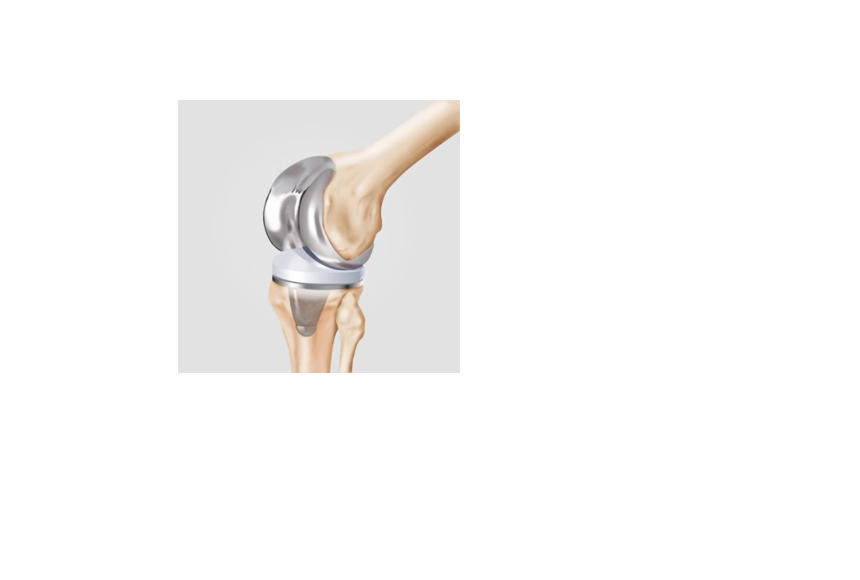
Knee Prosthesis
Knee prostheses are defined as artificial devices used to replace damaged knee joint components, which may include total knee arthroplasties that resurface the femoral and tibial sides, as well as unicondylar prostheses that target specific compartments of the knee. These prostheses can vary in design, such as constrained or unconstrained types, and often utilize a combination of metallic and high-density polyethylene materials.The models of instrumented knee prostheses (Chapter 21) were first proposed by D’Lima (D’Lima, Patil, Steklov, Slamin, & Colwell, 2006; D’Lima, Townsend, Arms, Morris, & Colwell, 2005) and Bergmann’s group (Heinlein, Graichen, Bender, Rohlmann, & Bergmann, 2007; Kutzner et al., 2010): also, a standard prosthesis (tibial tray) was modified adding a measuring system based on SG technique, an alimentation source, and a transmitter. The differences between the two proposed devices lie in the positioning of the SGs: D’Lima initially put the sensors between two layers of the tibial tray to measure the distribution of the compressive loads on the four quadrants of the tibial tray; Heinlein and Kutzner chose the inner part of the tibial stem as the housing for the measuring tool; later Kirking proposed a revised version of the D’Lima device (Kirking, Krevolin, Townsend, Colwell, & D’Lima, 2006) where the strain sensors were also positioned, like Heinlein’s solution, inside the tibial stem: the advantage of this configuration is the possibility of measuring the three components of both loads and moments, which was not possible in the earlier configuration by D’Lima. Like hip prosthesis, data related to knee prosthesis are also freely available (http://www.orthoload.com).