Bone Screws
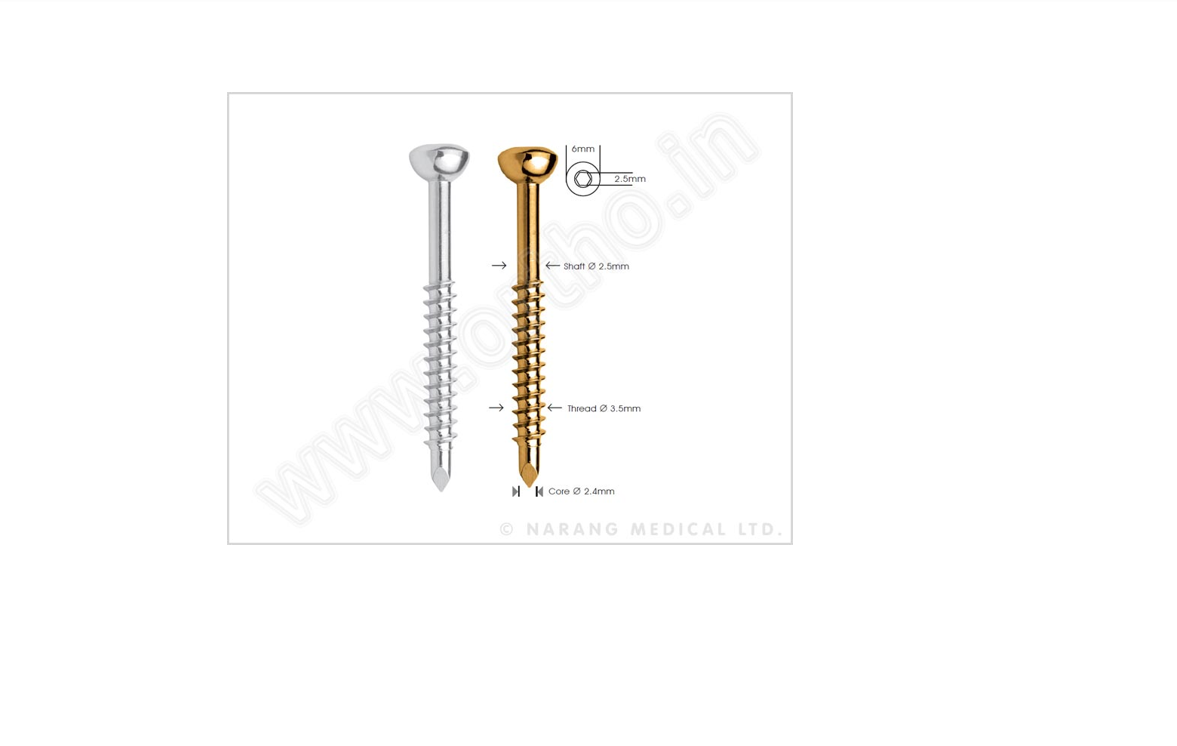
Bone screws are the most commonly used orthopaedic implants. Just as there are many different types and sizes of screws for wood and metal, there are many different screw types for bone. Most bone plates for long bone fracture fixation are made out of stainless steel or titanium alloys. The mechanics of screws for wood and metal apply in many ways to the mechanics of screws for bone. The outer diameter, root diameter, and thread pitch and angle are important in determining screw mechanics. Fig. 7.1 illustrates these parameters of a typical screw. In orthopaedics, screws are typically described by their outer diameter, for example, a “4.5 screw” has an outside diameter of 4.5 mm. The pitch of a screw is the linear distance travelled by a screw for one full turn of the screw. The screw advances by a distance equal to the distance between the threads with each full turn. Cortical screws have a lower pitch and therefore more number of threads. Cancellous bone screws have a greater depth of the screw to increase the surface area and therefore improve the purchase, as the bone is weaker (Parren et al., 1992). One can liken a screw used for cancellous bone to a wood screw and a bone screw used for cortical bone to machine screws.