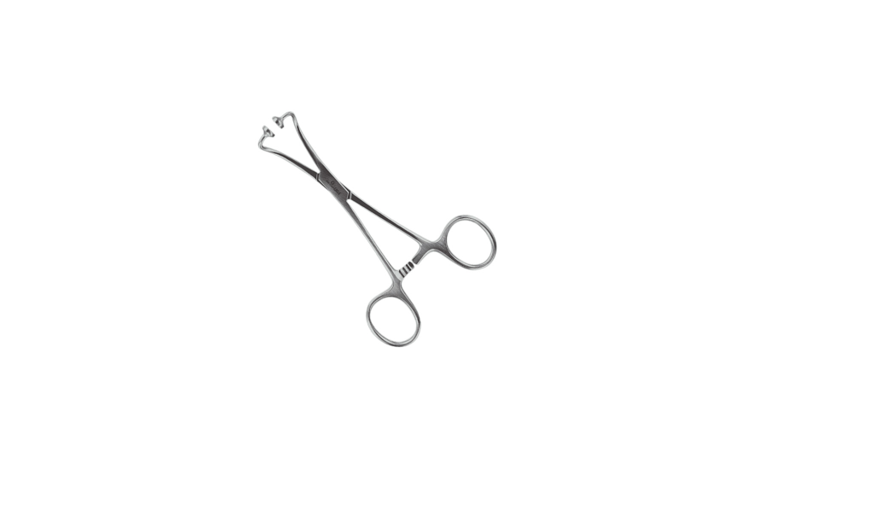
Clamps
A surgical clamp is a medical instrument designed to temporarily occlude blood vessels during an operation. It is mainly used to control bleeding, prevent fluid leaks and facilitate the manipulation of organs without causing injury.
Depending on their design and use, surgical clamps can be straight, curved or angled, and are generally made from stainless steel, titanium or medical polymers. These materials
guarantee high resistance, increased longevity and compatibility with sterilisation protocols.
Surgical clamps are indispensable in many medical specialties, including:
General surgery: occlusion of blood vessels to limit blood loss.
Cardiovascular surgery: specific clamps to m a i n t a i n blood circulation during surgery.
Digestive surgery: maintaining intestinal tissue to prevent leakage of body fluids.
Neurosurgery and gynaecology: delicate handling of fragile tissue.
Thanks to their precision and ergonomics, these devices improve the safety of operations and help to reduce post-operative complications.
II. The different types of surgical clamp
There are a wide variety of surgical clamps, each designed for a specific use depending on the operation and the tissues involved.
Here are the main types of clamp and their applications.
• Haemostatic clamps
Haemostatic clamps are used to control bleeding by temporarily blocking blood flow to a vessel. They have serrated jaws to ensure a firm grip without damaging the tissue.
• Vascular clamps
Specially designed for cardiovascular surgery, these clamps allow blood flow to be delayed or regulated without damaging vessel walls.
• Intestinal and tissue clamps
Used in digestive and gynaecological surgery, these clamps make it possible to
hold tissues in place and prevent fluid leaks.
• Clamps specific to certain operations
Some surgical clamps are designed for very specific applications.
Thanks to this diversity, each surgical specialty can rely on appropriate instruments to guarantee precision and safety throughout the operation.