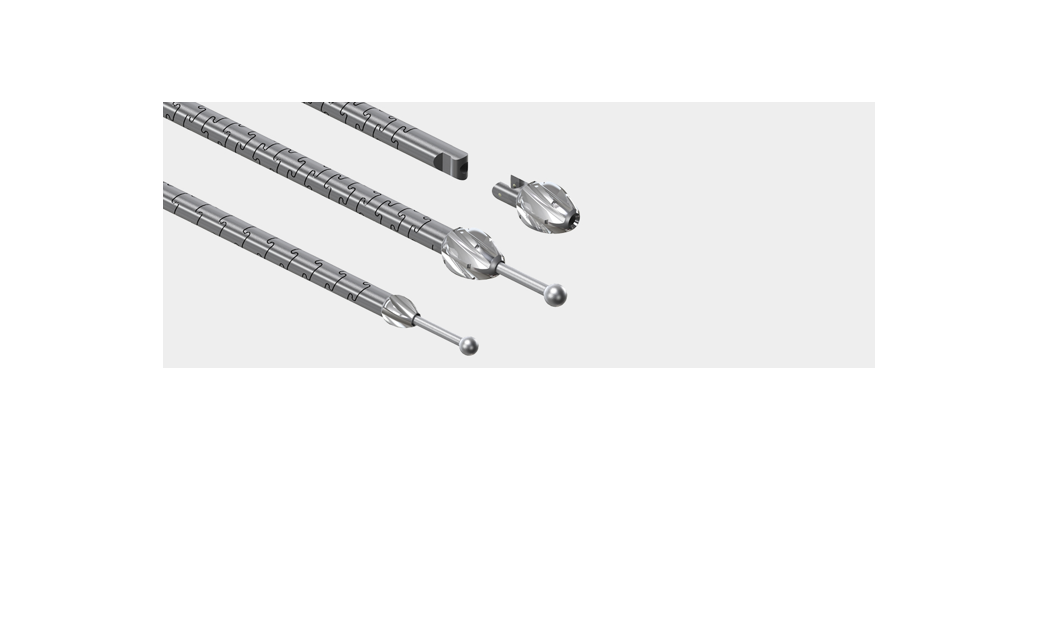
Reamer
Reamers are surgical instruments designed to enlarge or shape bony canals or cavities. They typically consist of a cutting head attached to a shaft with a handle or connection point for a power tool. The cutting head features sharp flutes or cutting edges that remove bone tissue as the reamer rotates.
Types of Orthopedic Reamers
Reamers are classified based on their design, function, and the specific surgical procedure they are used for. Some common types include:
Intramedullary (IM) Reamers: These are long, flexible or rigid reamers used to prepare the medullary canal of long bones (femur, tibia, humerus) for the insertion of IM nails. They come in various diameters and lengths to accommodate different bone sizes and fracture patterns. IM reamers can be flexible (used with a guide wire) or rigid.
Acetabular Reamers: Used in hip arthroplasty to prepare the acetabulum (hip socket) for the implantation of the acetabular cup. They are typically hemispherical or spherical in shape with multiple cutting edges.
Femoral Reamers: Used in knee and hip arthroplasty to prepare the femoral canal for the femoral stem or implant. They are often tapered or conical in shape.
Cannulated Reamers: These reamers have a hollow central channel that allows them to be passed over a guide wire, providing precise guidance and minimizing the risk of deviation.
Flexible Reamers: These are particularly useful in curved or narrow canals where rigid reamers cannot easily navigate.
Hand Reamers: These are manually operated reamers used for smaller procedures or when precise control is required.