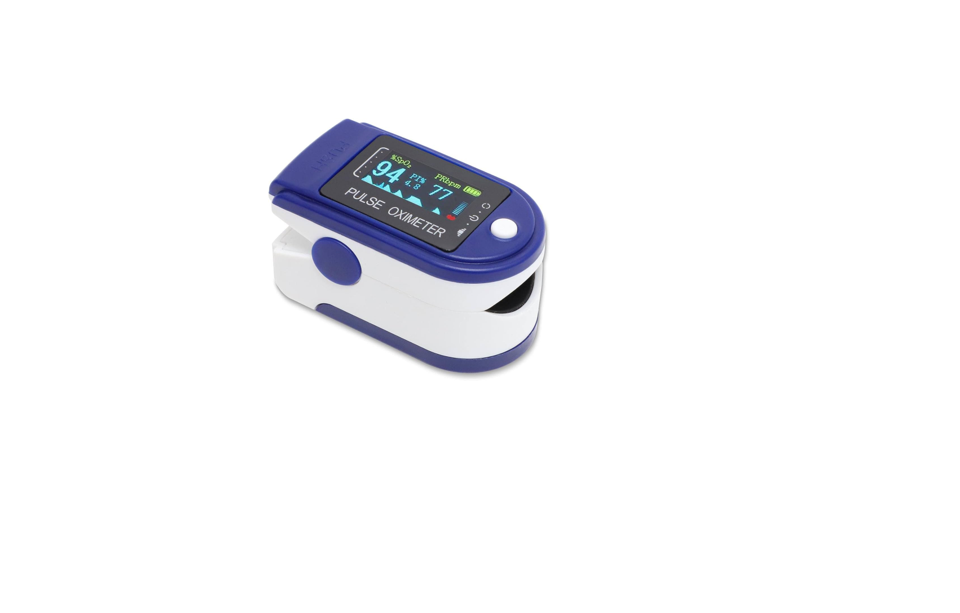
Pulse Oximeter
Pulse oximeters are well-tolerated medical devices that provide rapid data using noninvasive technology. The most commonly used sites for application are the fingernail and toenail beds. The machine algorithm detects arterial pulsations of very small caliber in arteriolar and capillary tissue beds. Consequently, a reliable signal may not easily be obtained in patients with low tissue perfusion or excessive movement of the extremities. Other sites, including the earlobe, forehead, nasal alar, and lips, have been utilized with success.[4]
In infants, the palm, foot, arm, cheek, tongue, penis, or nasal septum also may be used for probe placement. Site-specific sensors have been developed and calibrated and should be used for those applications whenever available. In addition to collecting light absorption spectra, most pulse oximeters also capture pulse wave activity and display the plethysmographic waves from which the clinician can gain additional valuable information.